The molecules and circuits underlying chronic pain
Chronic pain remains a major clinical problem with more than 600 million people suffering from various forms of chronic pain. This is due in large part to the still poor understanding we have of the underlying neuronal circuitry and mechanisms. Current medications have serious side effects or lack efficacy- as pain is mechanistically diverse.
Indeed, our work has focused on identifying the neural circuitry that mediates mechanical allodynia as a function of the type of injury identified a key node in the circuitry, important regardless of injury type (Noh et al, 2025; Peirs et al, 2021). The laboratory is continuing to identify neural circuits and novel molecular targets for chronic pain as well as developing first-in-class gene therapies that specifically target these circuits.
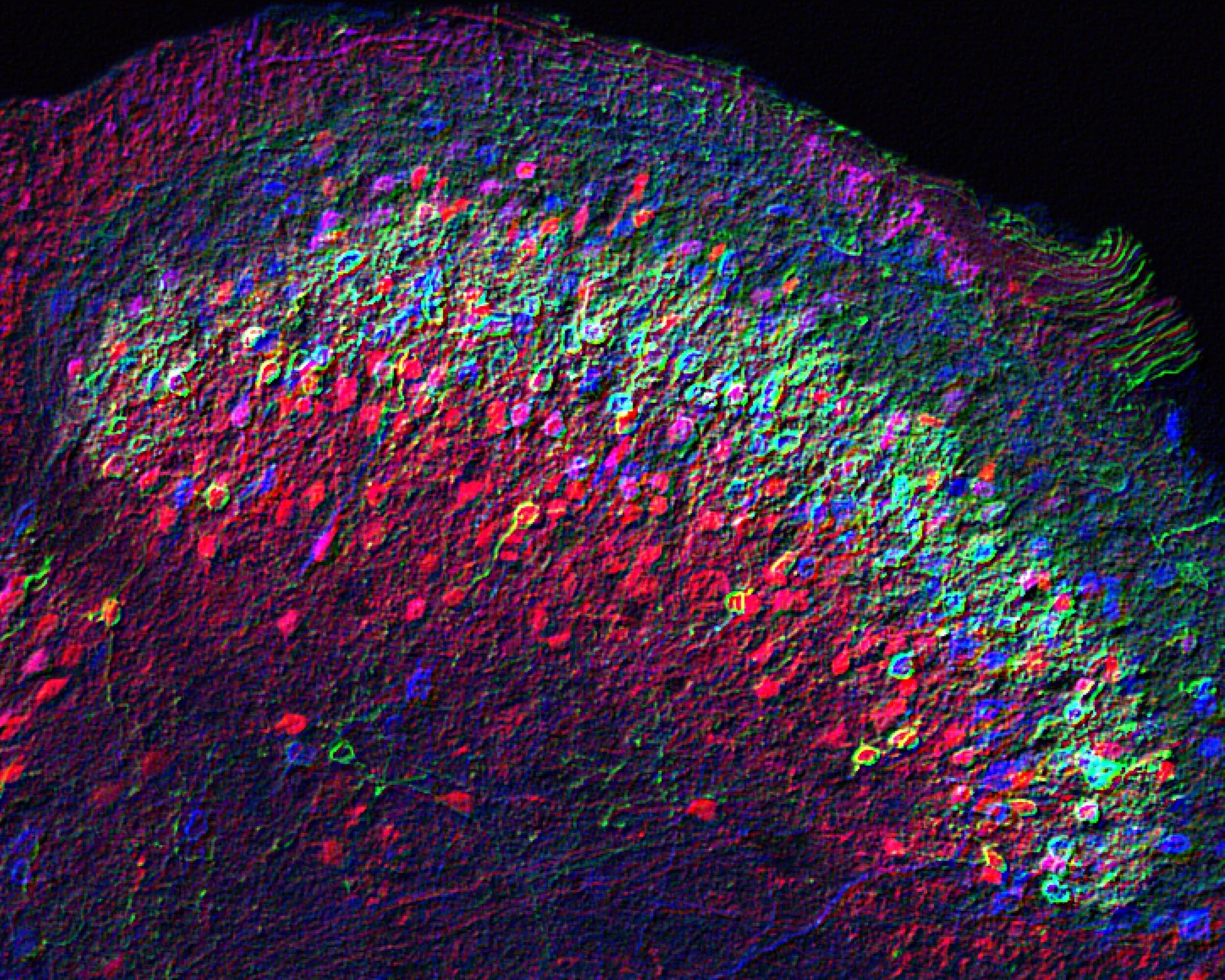
Toward this effort, we generated a truly species- integrated atlas of the dorsal horn using single cell transcriptomics, single cell open chromatin and spatial transcriptomics together with bioinformatics and machine learning pipelines in collaboration with the Pfenning Lab at CMU (Arokiaraj et al, 2024). Our goal is to use this species integrated atlas of neuron subtypes and open chromatin datasets to generate libraries of genomic enhancers that can be used to drive cell type specific genetically-encoded tools to study the neural circuitry in mice and macaques and to develop first-in-class gene therapies for chronic pain.
To study the neural circuitry, our laboratory uses a combination of single cell sequencing, chemogenetics, viral tracing, spatial transcriptomics, DREADDs, electrophysiology and behavior.
We welcome your participation in these efforts whether you are a graduate student, postdoctoral scholar, pain management specialist, neurosurgeon, philanthropist or biotech investor.